Almost every gray hair conversation in a salon chair starts in the wrong place, with the shade. The more useful conversation is about the grow-out. Full coverage and gray blending can look equally polished leaving a Mooresville salon on day one. By week five, one shows a clear line of regrowth and the other has quietly softened into your natural pattern. That difference decides your calendar for the next year.
Neither approach is the modern one or the giving up one. They are tools with different maintenance profiles, and plenty of clients move between them across a decade as their gray percentage, budget and patience change. Understanding the mechanics makes the choice straightforward.
Full coverage: complete, polished, committed
Full coverage color deposits opaque pigment over every strand, gray included, so the result is one even shade from root to tip, or a deliberate root color paired with lighter lengths. Nothing of your natural gray shows. For clients who want a decisive color, deep brunette, strong red, bright blonde, it remains the only route that delivers it.
The commitment is the root line. Hair grows about half an inch a month, and against an opaque color, new gray growth reads as a bright stripe that most people want handled every three to five weeks. Miss two cycles and the contrast announces itself. Full coverage suits clients who like the salon rhythm, keep standing appointments, and use root touch-up sprays or powders comfortably in the final week.
Blending: working with the pattern you have
Blending uses highlights, lowlights, glosses or demi-permanent color to soften the contrast between pigmented hair and gray, rather than hiding the gray entirely. Silver strands become part of the dimension. There is no hard line as it grows, because there was never a hard line applied. Appointments stretch out, commonly to eight weeks or more, with a gloss or toner in between for many clients.
Blending also gives an exit ramp. Clients who suspect they may eventually wear their natural gray can blend their way there gradually, each appointment a little lighter and more silver friendly than the last, instead of facing a year of stark regrowth. In Mooresville salons, that transition plan is one of the most common long term color conversations, and it works best when stylist and client map it out together from the start.

Choosing, and changing your mind
Choose by calendar first. If eight weeks between appointments sounds right and three sounds like a chore, blending fits your life even if coverage photographs slightly better on day one. Choose by goal second: full, even, saturated color requires coverage. Choose by gray pattern third: salt and pepper hair blends beautifully, while a single strong streak at the front can be either hidden by coverage or highlighted by blending into a deliberate feature.
You are not locked in. Blending can deepen toward coverage for a season of events and photos, and coverage can be broken up into blending when you tire of the root line, though that direction takes a session or two of highlights and toning to soften. What matters is that you and your stylist are working from the same picture of your next twelve months, not just your next appointment.
Photographs can help this decision more than mirrors can. A mirror shows you the gray at your hairline at close range, in bathroom light, which exaggerates contrast. Ask a friend to take a candid outdoor photo, the way the world actually sees you around Mooresville, and look at the overall effect instead of the individual silver strands. Many clients discover their gray reads as brightness and dimension at normal distance, which makes blending feel less like a compromise and more like the option they would have chosen first if the bathroom mirror had not argued otherwise for years.
Common questions
Does blending cover gray completely?
No, and that is the point. Blending softens the contrast so gray reads as dimension. Full coverage is the option that hides gray entirely.
How often does blended color need a salon visit?
Often every eight weeks or so, sometimes with a quicker gloss between. It varies with your gray percentage and how much contrast you enjoy.
Can I switch from full coverage to blending?
Yes. A stylist can break up the solid color with highlights and lowlights over one or two sessions, softening the root line as it grows out.
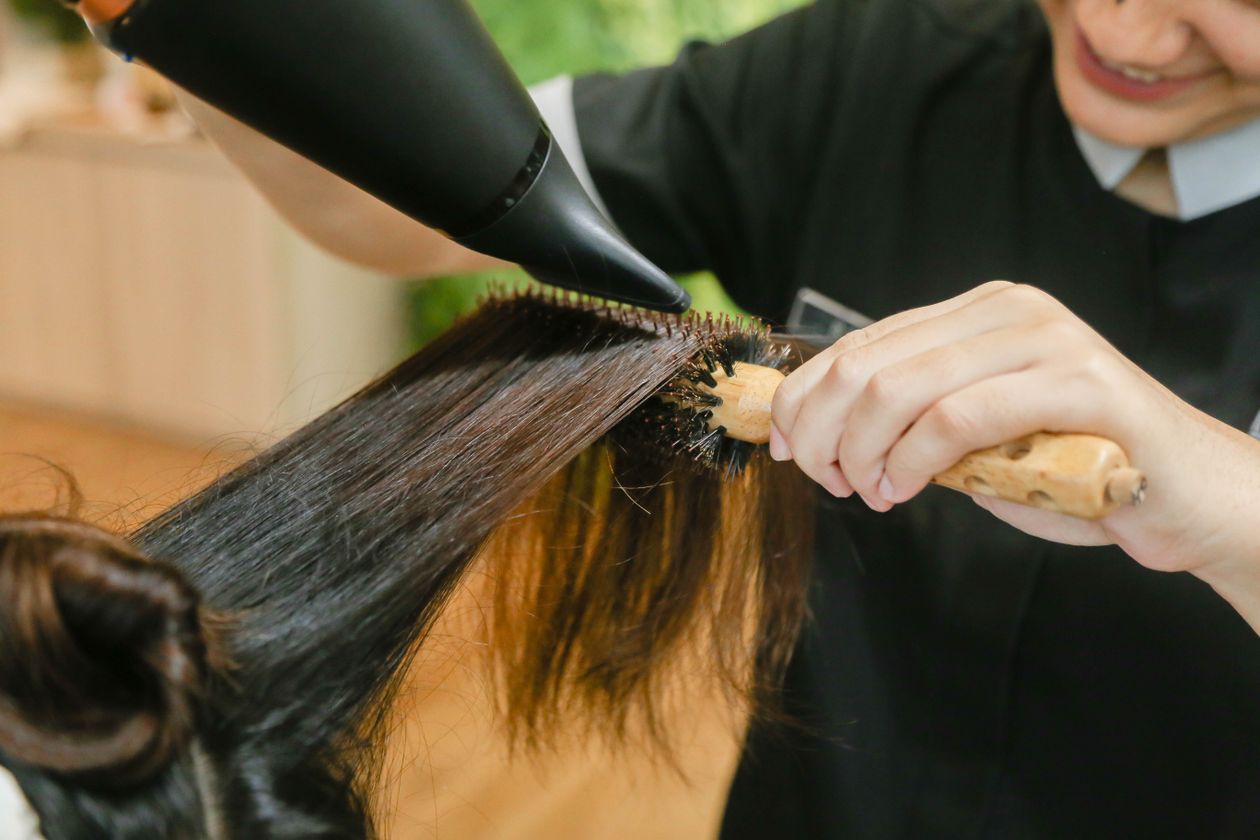
Photos in this guide are representative stock images.
← All guides from Bella Lago Salon & Spa← Back to Bella Lago Salon & Spa